My Store
Shentong and Rangtong (PDF)
Shentong and Rangtong (PDF)
Couldn't load pickup availability
Shentong and Rangtong (PDF)
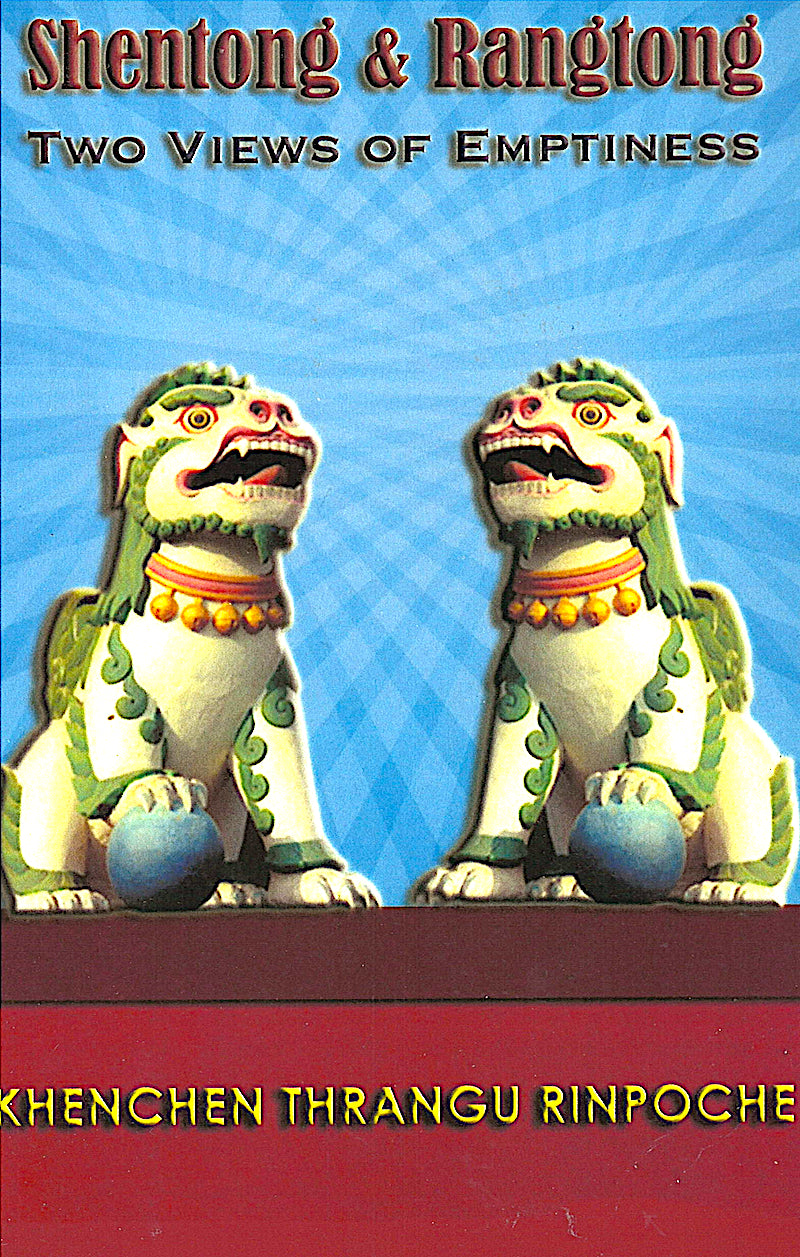
The Mahayana path of Buddhism requires the development of vast loving-kindness and compassion. The foundation for developing impartial compassion is based on understanding the emptiness of self and the emptiness of phenomena. In this book Thrangu Rinpoche begins with a lucid description of the four major schools of Buddhism and their tenants. Each school had its own view of reality and Rinpoche describes the similarities and differences of these views. The Middle-way path had two different understanding of phenomena when they came Tibet:.
First we must understand the word “emptiness” (Skt. shunyata) which has a special meaning in Buddhism. We naturally say our cup is “empty” we mean there is no tea in it. But when we say a tree is “empty” we mean that this thing is made up thousands of different parts (cells, branches, leaves, etc. and none of these are the actual tree. Rather the tree is “empty” because our mind this huge configuration and mentally “sees” and “believes” it is a tree. This is the Rangtong view of emptiness.
In the discussion of Shentong, Rinpoche describes the empty, luminous clarity of mind and how this is developed in meditation. This clarity is also closely related to understanding Buddha-nature and the advanced practice of meditation.
